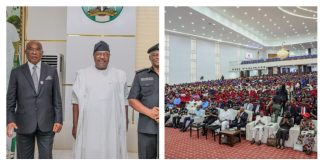
Lagos State Governor, Mr. Babajide Olusola Sanwo-Olu, has underscored the urgent need for stronger collaboration between government and religious leaders, noting that Alfas and Pastors remain critical voices in helping citizens understand the true state of affairs and counter misinformation across communities.
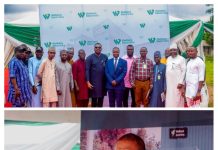
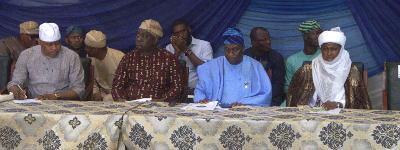
Sanwo-Olu stated this at a Capacity Training and Enhancement Workshop for Imams and Ulama in Lagos State, organized by the Council of Chief Imams and Ulama, Lagos State, with the theme, “Enhancing the Partnership of Spiritual Leaders and Government in Nation Building,” held today at the Lagos Central Mosque, Lagos.
The Governor, who was represented by his Deputy, Dr. Kadri Obafemi Hamzat, emphasized that messages delivered from the pulpit, whether during Friday prayers in the mosques or Sunday services in the churches, carry significant influence.
He added that when religious leaders clearly communicate government intentions and realities, citizens are more likely to listen, understand, and align with ong developmental plans being pursued by the government.
According to the Governor, “We need to be coordinated. If we fail to actively engage these key faith leaders, we disadvantage ourselves as a government. Their voices reach the very people we are trying to speak to, and partnering with them will ensure our messages are not only heard but trusted.”
Speaking further, Sanwo-Olu expressed concern that many individuals and institutions are abandoning their responsibilities, but assuring that the government will take firm steps to address such lapses.
He also raised questions about the declining religious identity among young people, stressing the need for faith leaders to work together to reinforce values and preserve their religious heritage. “We must ask ourselves: what are we doing that our children are leaving our religion? If so, what can we do to ensure that our children remain within our faith traditions?” he queried.
The Governor stressed the importance of strengthening the Nigerian Inter-Religious Council (NIREC) as a collaborative platform for Muslim and Christian leaders, noting that its unified structure remains vital to sustaining peace and preventing disputes across communities.
In his lecture titled, “Promoting Self‑Reliance and Economic Empowerment of Spiritual Leaders,” the Special Adviser to Lagos State Governor on Islamic Matters, Alh. Jebe Abdullahi Ahmad called for renewed efforts to promote the economic empowerment and self-reliance of Imams and spiritual leaders, stressing that financially independent faith leaders are crucial to social stability and community development.
Jebe noted that spiritual leaders must combine their religious responsibilities with lawful economic productivity, citing that the Prophet Muhammad (SAW) exemplified the balance between faith and sustainable livelihood. “Empowered spiritual leaders build empowered communities. I want to urge our Imams to take ownership of their economic future while remaining steadfast in their service to the Ummah,” stated the Special Adviser.
He highlighted several pathways to self-reliance, including skill acquisition, small-scale entrepreneurship, time management, and access to Lagos State’s empowerment schemes such as LSETF and community development grants, among others.
The Special Adviser added that both the government, the private sector, and religious institutions must work together to create training opportunities, cooperative societies, and endowment structures that support long-term financial stability for spiritual leaders.
Similarly, in his lecture, “The Imam as the Bridge of Trust between Government and the People,” National Missioner, Ansar-ud-deen Society of Nigeria, Sheikh Abdur’Rahman Olanrewaju Ahmad emphasized the need for deeper collaboration with religious institutions, declaring spiritual leaders as indispensable partners in nation-building.
Ahmad added that sustainable development is strengthened when spiritual guidance and public governance work hand-in-hand to shape the moral fabric of the society. “Most times when the government makes policies, it is the clerics, especially the Imams, that will explain and sensitize the congregations,” said the Sheikh.
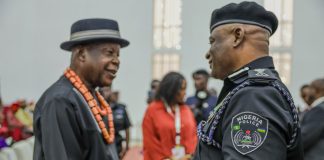
In his welcome address, the Grand Chief Imam of Lagos/Chairman, Council of Chief Imams and Ulama in Lagos, Sheikh Sulaiman Oluwatoyin Abou-Nolla, stated that the event underscores the indispensable role of collaboration between faith-based institutions and governance in fostering peace, progress, and prosperity for the beloved nation.
“In a world fraught with challenges, from social discord to economic uncertainties, the synergy between spiritual guidance and governmental leadership becomes a beacon of hope. This seminar provides a platform for us to explore practical ways to strengthen this partnership, drawing from Islamic teachings, shared values, and collective wisdom to contribute meaningfully to Nigeria’s development,” Abou-Nolla said.