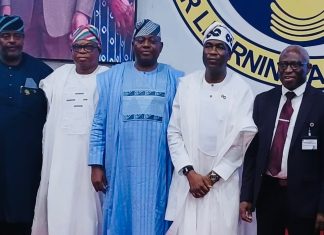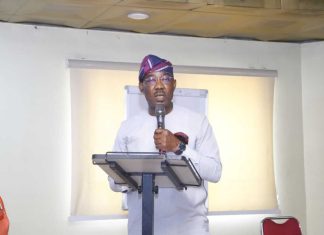

Conversations about leadership often circle back to a familiar question; who will carry the responsibility of shaping the next phase of its’ growth? Increasingly, that conversation is drawing in younger voices determined to redefine public service.
Among them is Oluwadamilare Adebowale Bashir, a businessman whose professional success in the tourism sector has gradually evolved into a broader call for civic engagement and political participation.
Bashir, widely known in business circles as a savvy and cosmopolitan entrepreneur, built his reputation through a travel consultancy. Through this work, he has gained not only commercial experience but also a deeper understanding of the economic possibilities embedded within Lagos’ cultural and tourism landscape.
For him, tourism represents more than leisure; it is a powerful economic engine capable of generating employment and expanding opportunities, particularly for young people.
His entry into politics, Bashir explains, was shaped by a sense of responsibility as both a youth and an indigene of Lagos State. He believes the next stage of development requires active participation from younger leaders who understand the pressures confronting their generation. That conviction has guided his decision to step into public life with a message that emphasizes inclusion, accountability and youth-driven growth.
Central to Bashir’s thinking is the importance of listening. His approach to leadership, he says, has been shaped by constant engagement with young people across communities. Through those conversations, he has come to understand the frustrations that many citizens feel toward political institutions, particularly when elected officials appear distant or unresponsive. In his view, restoring public trust begins with accessibility and accountability, two qualities he believes must remain at the core of responsible governance.
For Bashir, youth empowerment is not merely a campaign slogan but a policy priority. Lagos, like much of Nigeria, faces the pressing challenge of youth unemployment, a reality that demands practical solutions rather than symbolic gestures. He acknowledges efforts already underway within government structures but argues that more emphasis should be placed on structured skill acquisition programs, entrepreneurial support and easier access to funding for young innovators seeking to establish businesses.
Tourism, in Bashir’s perspective, offers one of the most promising avenues for such development. Lagos, he notes, has successfully presented its modern urban image to the world. Its’ skyline, nightlife and creative industries already attracting global attention. Yet he believes the state has only begun to tap into the deeper cultural heritage that exists across its’ historic communities. By integrating modern attractions with traditional festivals, historical landmarks and indigenous cultural expressions, Bashir argues that Lagos could strengthen its’ reputation as a global tourism destination while creating thousands of new jobs.
Beyond economic development, Bashir speaks with equal conviction about the importance of gender inclusivity. He sees women and girls as central contributors to Nigeria’s social and economic future. In his view, expanding opportunities for women requires deliberate policies from scholarships that support academically gifted girls to mentorship programs and leadership training initiatives designed to prepare women for greater participation in business, politics and public service.
Sustainable development, he adds, must also be supported by technological advancement. Bashir believes that a technology-driven governance system, one that integrates digital tools into policy planning and implementation will be essential for building a more efficient, transparent and globally competitive Lagos economy.
His message to young Lagosians is direct: political change requires participation. Bashir encourages young people to engage actively in civic conversations, policy debates and community initiatives, reminding them that democracy becomes stronger when citizens lend their voices to shaping its direction.
In practical terms, he has outlined an initiative aimed at transforming empowerment into measurable opportunity. The proposed program would provide five days of intensive skills training, followed by a three-month Industrial training placement designed to equip participants with practical experience and ultimately connect them to employment opportunities.
Bashir views such programs as essential steps toward bridging the gap between training and sustainable livelihoods.
Like many young leaders entering public life, Bashir acknowledges that skepticism remains. Critics have questioned whether youth alone provides the experience required to navigate complex political structures. Yet he remains undeterred, pointing to the leadership philosophy of President Bola Ahmed Tinubu, whose political legacy in Lagos he credits as a source of inspiration for his own aspirations in public service.
For Bashir, the journey into politics is not simply about ambition. It is about responding to a broader call for renewal in leadership. In urging citizens, especially young people to be ‘part of the change you are clamouring for’, he frames political participation not as a distant ideal but as a shared responsibility.