By every meaningful measure, a hundred days is too brief to transform a security landscape. Yet it is often long enough to reveal the philosophy of leadership. In Ogun State, the opening chapter of the Commissioner of Police, CP Bode Ojajuni’s administration has been less about headline-grabbing declarations and more about building a policing model anchored on intelligence, prevention, collaboration and decisive operational response.
From his first weeks in office, CP Bode Ojajuni inherited a uniquely demanding security environment. Ogun State’s strategic location as Nigeria’s industrial gateway, its’ extensive international border with the Republic of Benin, its’ proximity to Lagos and its’ vast network of highways make it both an economic powerhouse and a potential transit corridor for organized criminal groups. The challenge was therefore never simply to respond to crime, but to anticipate and disrupt it before it could take root.
That philosophy has become the defining feature of the Command’s first one hundred days.
A Security Architecture Built on Intelligence
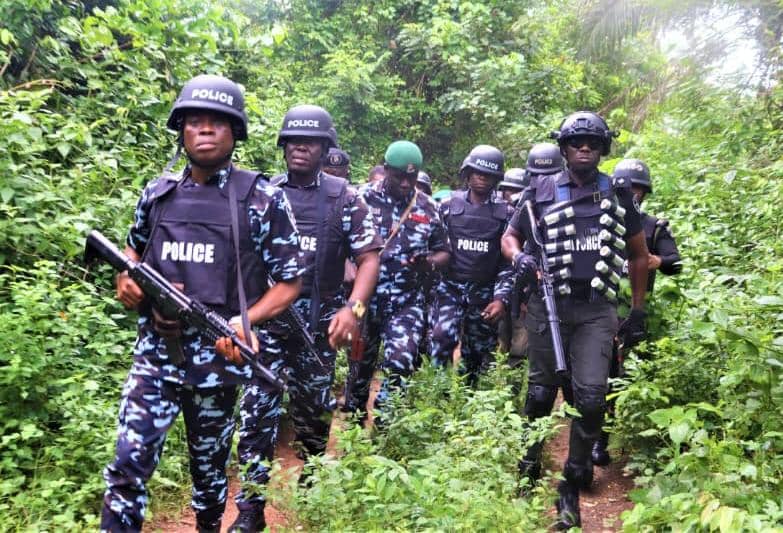
Rather than relying exclusively on conventional policing, the Command rapidly embraced intelligence-led operations supported by technology, community partnerships and inter-agency cooperation.
The result has been a succession of coordinated operations targeting kidnappers, armed robbery syndicates, cult groups, vehicle theft rings, fraud networks, cross-border traffickers and transnational criminal organizations.
Across multiple Area Commands and Divisions, police operatives recorded the arrest of scores of suspects, recovered stolen vehicles, motorcycles, firearms, ammunition, communication devices, generators, laptops and substantial sums of money believed to be proceeds of crime.
More significantly, many of these operations prevented crimes before victims suffered irreversible consequences.
Operation Kosaye: Redefining Cross-Border Security
Among the defining achievements of the Command’s first 100 days is Operation Kosaye, a joint security initiative between the Ogun and Lagos State Police Commands.
Recognizing that organized crime respects neither administrative nor geographical boundaries, the operation established a coordinated framework for intelligence sharing, synchronized patrols and tactical deployments across the Lagos-Ogun corridor.
The strategy disrupted criminal mobility, denied kidnappers and armed robbers the opportunity to exploit state borders as escape routes and significantly strengthened surveillance along critical highways and border communities.
Operation Kosaye has become more than a policing exercise; it represents a new model of regional security cooperation capable of responding to increasingly sophisticated criminal networks.
Sustained Pressure on Kidnapping Networks
Perhaps no area better illustrates the Command’s operational resolve than its campaign against kidnapping.
Within the review period, Anti-Kidnapping operatives successfully secured the release of abducted victims through painstaking intelligence gathering and sustained tactical pressure.
Follow-up operations neutralized armed kidnappers during exchanges of gunfire, while substantial exhibits including firearms, ammunition, mobile phones and over ₦2.2 million suspected to be proceeds of criminal activity were recovered.
Equally significant were preventive successes.
A carefully coordinated plot to abduct a Chinese expatriate for a ₦50 million ransom was dismantled before it could be executed. Intelligence also exposed a sophisticated transnational fake kidnapping syndicate involving foreign nationals who staged an abduction in Nigeria to extort ransom from relatives overseas.
These operations demonstrated that modern policing increasingly depends upon anticipating criminal intent rather than merely investigating completed offences.
Closing the Space for Organised Crime
The Command also intensified pressure on organised criminal groups involved in armed robbery, vehicle theft and illegal firearms.
Several robbery syndicates operating within Abeokuta, Ibafo, Ogere, Ajuwon, Ode-Remo and surrounding communities were dismantled through coordinated tactical operations.
Police recovered stolen Toyota Venza, Toyota Camry, Toyota Corolla and Toyota Coaster vehicles, intercepted cross-border vehicle trafficking attempts destined for neighbouring Benin Republic and arrested suspects linked to interstate robbery operations.
Firearms recovered during these operations included pump-action rifles, locally fabricated pistols, Dane guns and ammunition, alongside numerous stolen mobile phones, laptops and industrial equipment.
Each recovery represented not only the return of stolen property but also the disruption of criminal economies that depend upon illicit resale networks.
Taking the Fight to Cultism
Recognizing the relationship between cultism and violent crime, the Command adopted an aggressive strategy against organized cult groups.
Police disrupted initiation ceremonies before they could be completed, arrested suspected cult leaders, recovered operational vehicles and dangerous weapons, while transferring suspects for prosecution.
Yet enforcement formed only one half of the strategy.
The Command formally launched the Police Campaign Against Cultism and Other Vices (POCACOV) in Ogun State, embracing preventive policing through school outreach, youth mentorship, behavioural reorientation and sustained public enlightenment.
Working with educational institutions, parents, civil society and community organisations, POCACOV has reinforced the principle that the most effective crime prevention begins long before criminal recruitment occurs.
Community Partnership as a Security Asset
The first hundred days also witnessed renewed investment in relationships rather than merely operations.
CP Ojajuni undertook extensive familiarization tours across Area Commands, meeting traditional rulers, local government leaders, corporate organizations, transport unions, hunters’ associations, community leaders and sister security agencies.
Strategic engagements with the Akarigbo of Remoland, the Alake of Egbaland, industrial stakeholders such as TGI Group and Lafarge and numerous community institutions reinforced a central message that sustainable security cannot be delivered by the Police alone.
The same philosophy informed stakeholder engagements during the visit of the Deputy Inspector-General of Police supervising the South-West, DIG Adegoke Fayoade, further strengthening collaboration across government, traditional institutions and security organizations.
Prevention Before Reaction
The Command equally demonstrated that preventive policing often succeeds quietly.
Statewide enforcement against vehicles operating without registration plates or with obscured number plates resulted in dozens of violators being sanctioned, improving vehicle traceability and reducing opportunities for anonymous criminal movement.
Meanwhile, transparent updates on sensitive homicide investigations, prompt recovery of missing exhibits and regular public communication reinforced confidence in police professionalism.
Beyond Statistics
Statistics alone rarely capture institutional progress.
The significance of the Command’s first hundred days lies less in the number of arrests or recoveries than in the coherence of its’ strategy.
Whether confronting kidnappers, dismantling robbery syndicates, disrupting cult recruitment, strengthening border security, promoting youth engagement through POCACOV or building partnerships through Operation Kosaye, each initiative reflects the same underlying philosophy of intelligence before reaction, prevention before escalation and partnership before isolation.
It is a model that recognizes policing as both an operational and social enterprise.
Looking Ahead
The first hundred days are seldom the measure of an administration’s legacy, but they often forecast its’ direction.
For CP Bode Ojajuni, the early months have established an ambitious operational template built upon intelligence, discipline, technology, inter-agency cooperation and community participation.
As criminal networks evolve in sophistication, the challenge ahead will be sustaining operational momentum while deepening public trust.
If the trajectory established during these opening months continues, Ogun State’s policing model may increasingly be remembered not merely for responding effectively to crime, but for systematically reducing the opportunities for criminality to flourish in the first place.
The first 100 days therefore stand not as the culmination of a tenure, but as the foundation of an evolving security agenda whose most consequential chapters may yet lie ahead. For CP Bode Ojajuni, he is poised to be not just a law enforcer but a testament to effective policing that has a human face.