By Goodness Anenih
Experts have warned that climate change has moved beyond being an environmental concern to a direct and present threat to human security, livelihoods, and national stability, urging urgent action to address its growing impacts.
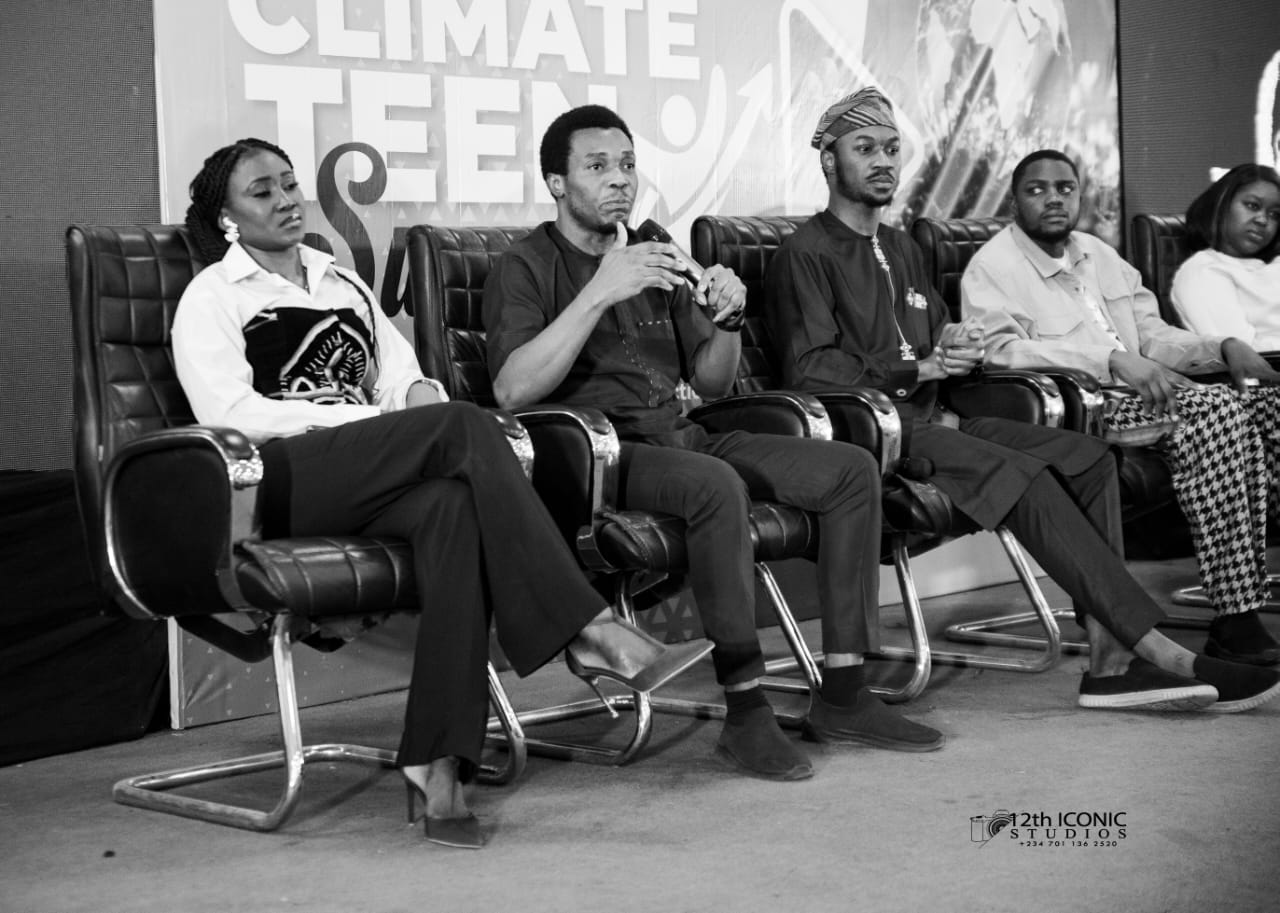
The warning was issued at the Teens’ Climate Summit held in Abuja, where climate and security experts, policymakers, and young Nigerians gathered to discuss climate risks, governance, and solutions for the future.
Speaking at the summit, retired Air Vice Marshal Akugbe Iyamu said climate change now poses serious security challenges, particularly through water scarcity, food insecurity, and displacement, stressing that these pressures can fuel conflict and instability.
Iyamu noted that Nigeria remains committed to global efforts to limit temperature rise below two degrees Celsius in line with the Paris Agreement, describing the pact as a landmark framework built on collective global responsibility.
He explained that climate-induced water stress has already become a major concern, revealing that one in four children currently lives in areas experiencing water scarcity, a figure projected to rise if decisive measures are not taken.
According to him, the Paris Agreement undergoes a review every five years to assess progress and respond to emerging threats, adding that recent global engagements emphasised the need to move from discussions to concrete implementation.
“Enough of the talk,” Iyamu said, stressing that the scale of climate risks now demands urgent, practical action rather than policy rhetoric.
Earlier, a goodwill message delivered on behalf of the Secretary-General of the Conference of Speakers and Presidents of African Legislatures (COSPAPAL) and Director-General of the National Council on Climate Change (NCCC), Omotenioye Majekodunmi, said climate change has become a lived reality for young Nigerians.
The message highlighted how unpredictable rainfall, extreme heat, and recurrent flooding now disrupt education, livelihoods, and community life, underscoring the need to embed climate action in strong policy, law, and governance frameworks.
It identified the Climate Change Act of 2021 as a major milestone for Nigeria, noting that the law established a framework for climate governance, created the NCCC, and committed the country to achieving net-zero emissions by 2060.
The message also pointed to Nigeria’s Energy Transition Plan, renewable energy policies, and updated climate commitments under the Paris Agreement as evidence of the country’s growing resolve to address the crisis.
Under President Bola Ahmed Tinubu, Nigeria has further strengthened its role in global climate governance with the approval of a National Carbon Market Framework and the operationalisation of the Climate Change Fund ahead of COP30.
These initiatives, the message said, are aimed at unlocking climate finance and supporting implementation at both national and sub-national levels.
At the continental level, Africa’s response was highlighted through frameworks such as the African Union’s Agenda 2063, which positions climate change as a development, security, and justice issue while advocating fair climate finance and just energy transitions.
Institutions like COSPAPAL were described as vital in harmonising climate legislation across Africa and ensuring that executive climate commitments translate into enforceable laws, funded programmes, and measurable outcomes.
In a separate goodwill message, the Executive Secretary of the National Universities Commission (NUC), Professor Abdullahi Yusuf Ribadu, represented by Patrick, challenged young Nigerians to take ownership of climate leadership through education, research, and community engagement.
He urged students to lead with evidence, innovation, and urgency, emphasising that leadership has no age limit and that universities must serve as incubators for solutions to Nigeria’s growing climate challenges.