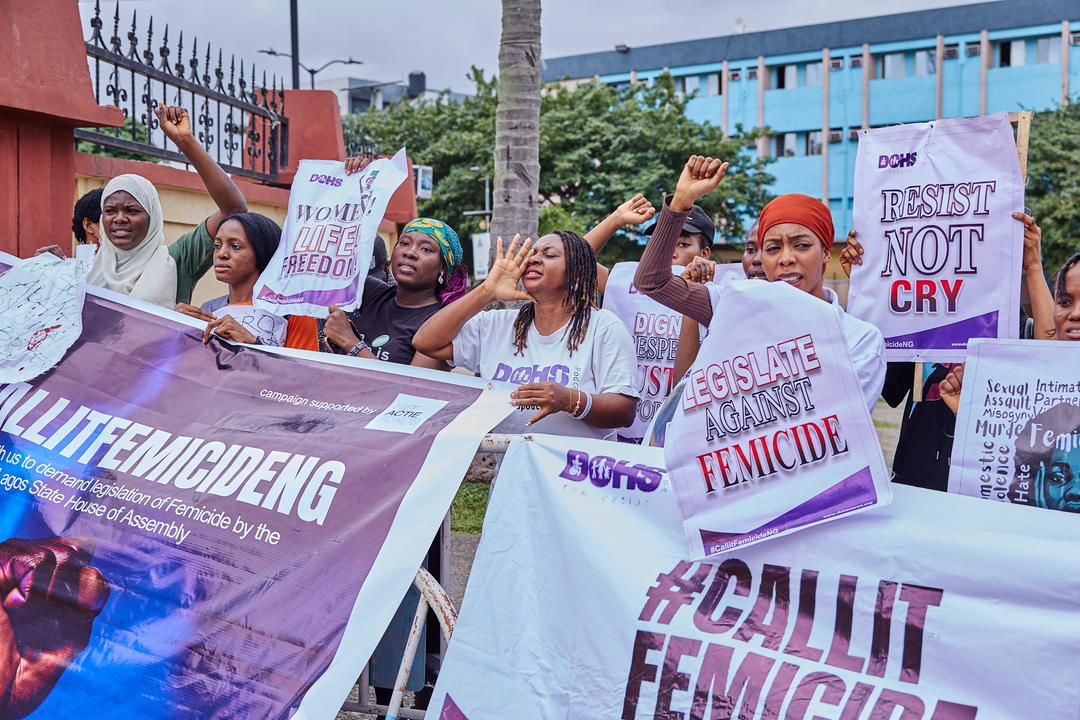
Seventeen years after the United Nations General Assembly declared 20 February as World Day of Social Justice, Nigeria continues to mark the day alongside the global community. Yet for victims of femicide and the families they leave behind, social justice remains largely symbolic.
Femicide, the intentional killing of women because they are women, is the most extreme expression of gender-based violence. It is rooted in misogyny, control, and a culture that continues to excuse or normalize violence against women. While global conversations advance, Nigerian women are still being killed at alarming rates, and the systems meant to protect them remain weak, fragmented, and slow.
In 2024, DOHS Cares Foundation tracked 136 reported femicide cases, resulting in 150 deaths. In 2025, the numbers worsened: 172 reported cases and 197 deaths. These figures likely represent only a fraction of the true national toll. The upward trajectory is not just a statistic; it is evidence of systemic failure.
But the injustice does not end with death.
Every woman killed leaves behind living victims: children orphaned, families destabilized, communities scarred. Many of these women were primary caregivers. Their absence fractures households and pushes already vulnerable families deeper into poverty and instability. Children who witness or experience the aftermath of femicide often endure long-term trauma, manifesting as anxiety, sleep disorders, aggression, post-traumatic stress, dissociation, and educational decline. Research consistently shows that exposure to violence in childhood significantly increases the likelihood of re-enactment later in life, perpetuating an intergenerational cycle.
Yet Nigeria lacks a structured, holistic system to respond to these living victims.
After the headlines fade, grieving families are left to shoulder the burden alone. There is no coordinated national framework tracking where orphaned children are placed, monitoring their safety, or ensuring access to trauma care. Many children are sent to relatives without follow-up. In some cases, silence, stigma, or coercion suppress their voices. They are expected to “move on” without the tools to process profound loss.
Justice is equally delayed. Trials are slow. Prosecutions stall. Accountability is inconsistent. For many families, closure remains out of reach.
On this World Day of Social Justice, DOHS Cares Foundation is calling attention to the urgent need for holistic justice in femicide cases; justice that goes beyond sentencing perpetrators. Holistic justice must include:
Expedited trials and dedicated prosecution pathways for femicide cases
A national tracking and safeguarding system for children orphaned by femicide
Integrated trauma, psychosocial, health, and economic support for living victims
Sustained funding and institutional support for frontline organizations
To bridge this gap, DOHS Cares has proposed a draft Femicide Bill that prioritizes holistic support for living victims.
In addition, we are developing Healing Haven for Living Victims of Femicide; a trauma-informed recovery center designed to provide professional counselling, temporary safe accommodation, healing circles, economic empowerment, and long-term psychosocial care for women and children affected by gender-based violence. https://gofund.me/c1da8a67e
Because after femicide, the world may move on, but survivors do not.
“Social justice cannot be selective,” says Ajayi Ololade, Founder of DOHS Cares Foundation. “When a woman is killed, the violence does not end with her death, it multiplies in the lives of her children. Until Nigeria builds a system that protects the living victims, accelerates prosecution, and guarantees holistic recovery, we cannot claim to be advancing justice. We are not asking for sympathy. We are demanding structural change.”
As Nigeria observes the 17th World Day of Social Justice, we must confront a difficult truth: social justice cannot exist where women are killed with impunity and children are left without protection or structured care.
The time for symbolic observance has passed. The time for systemic action is now.