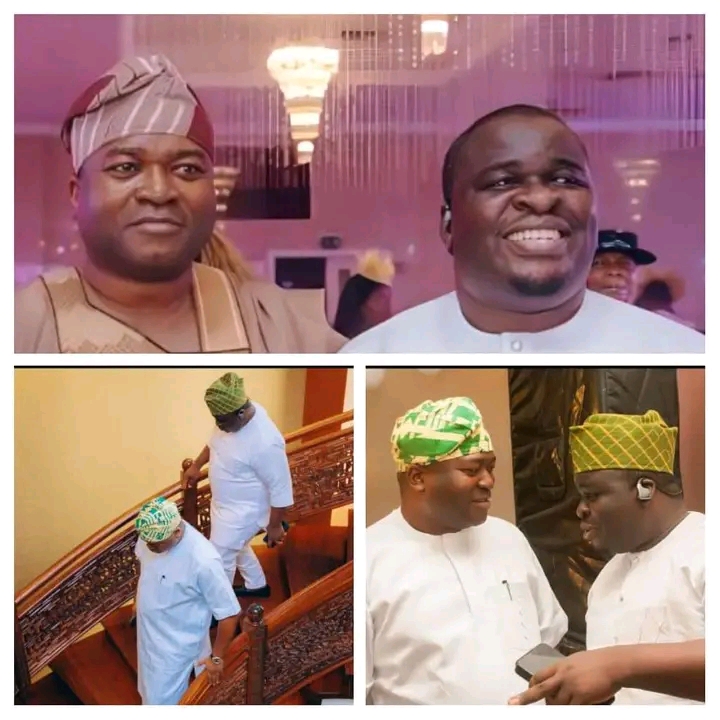

In Lagos, politics and heritage still matter and few stories blend ancestry, aspiration and modern governance as seamlessly as that of Oluwadamilare Sonayon Adebowale Bashir. Rooted firmly in the Agboworin family of Alausa, Ikeja and maternally descended from the historic Agosu dynasty of Ajido Badagry, Bashir represents a lineage that has long shaped Lagos’ cultural and civic identity.
He is also the grandson of late Pa Emmanuel Agosu, a celebrated pioneer broadcaster and the first to bring the Ogu dialect to radio and television, fondly called Baba Jakande doo and remembered for iconic programmes such as ‘Soo-Da-Be?’
By blood and by conviction, Bashir is a full-rounded Lagosian, one whose personal history mirrors the diversity, resilience and cultural depth of the state itself.
A committed democrat, Bashir openly aligns with the people-centered and inclusive leadership philosophy of President Bola Ahmed Tinubu, a political style anchored on economic expansion, institutional strength, continuity and governance that prioritizes opportunity for the many rather than privilege for the few. In that tradition, he is setting his sights on the Lagos State House of Assembly, seeking to represent Ikeja 1 Constituency.
His ambition is both clear and symbolic; to restore authentic representation. Bashir argues that over the years, the indigenous voice of Ikeja has steadily faded, taking with it cultural pride and traditional continuity. His aspiration, he says, is to return that voice to the heart of governance by ensuring that policies reflect the lived realities, values and aspirations of the people of Ikeja.
Beyond electoral politics, Bashir’s vision is deliberately cultural, economic and generational. He believes Ikeja’s rich traditions remain an under leveraged asset and plans to work closely with traditional rulers, historians, creatives and cultural institutions to revive customs that can power a vibrant tourism economy. From heritage festivals and cultural landmarks to storytelling, museums and indigenous art spaces, Bashir sees Ikeja as a destination capable of attracting both local and international visitors.
Central to this cultural renaissance is addressing a long-standing void. Ikeja has been without a monarch for over 11 years. One of his stated goals is to institute a credible, inclusive committee to facilitate the restoration of a monarch for the Ikeja people, an effort he believes will reinforce identity, unity and cultural pride, while also providing a symbolic anchor for tourism development and community cohesion.
Equally central to his agenda is youth empowerment and capacity building. Bashir identifies the youth as Ikeja’s greatest untapped resource and envisions a constituency where young people are equipped not just to survive, but to lead. His focus spans skills acquisition, entrepreneurship support, creative industry development, technology training and mentorship pipelines that connect young people to opportunities within and beyond Lagos. He aims to position Ikeja as a hub for human resource development and institution building, where talent is nurtured, innovation is encouraged and productivity translates into sustainable economic growth.
By integrating youth empowerment with tourism and cultural revival, Bashir’s vision creates a self-reinforcing development cycle; one where culture creates jobs, tourism stimulates local enterprise and empowered youths become custodians of heritage and drivers of growth.
In many ways, his political journey reflects the enduring Tinubu doctrine: inclusive governance, grassroots engagement, strategic continuity and development with purpose. For Ikeja 1, Oluwadamilare Sonayon Adebowale Bashir is positioning himself not merely as a candidate, but as a custodian of heritage, an advocate for youth-driven progress, and a bridge between tradition and the future.