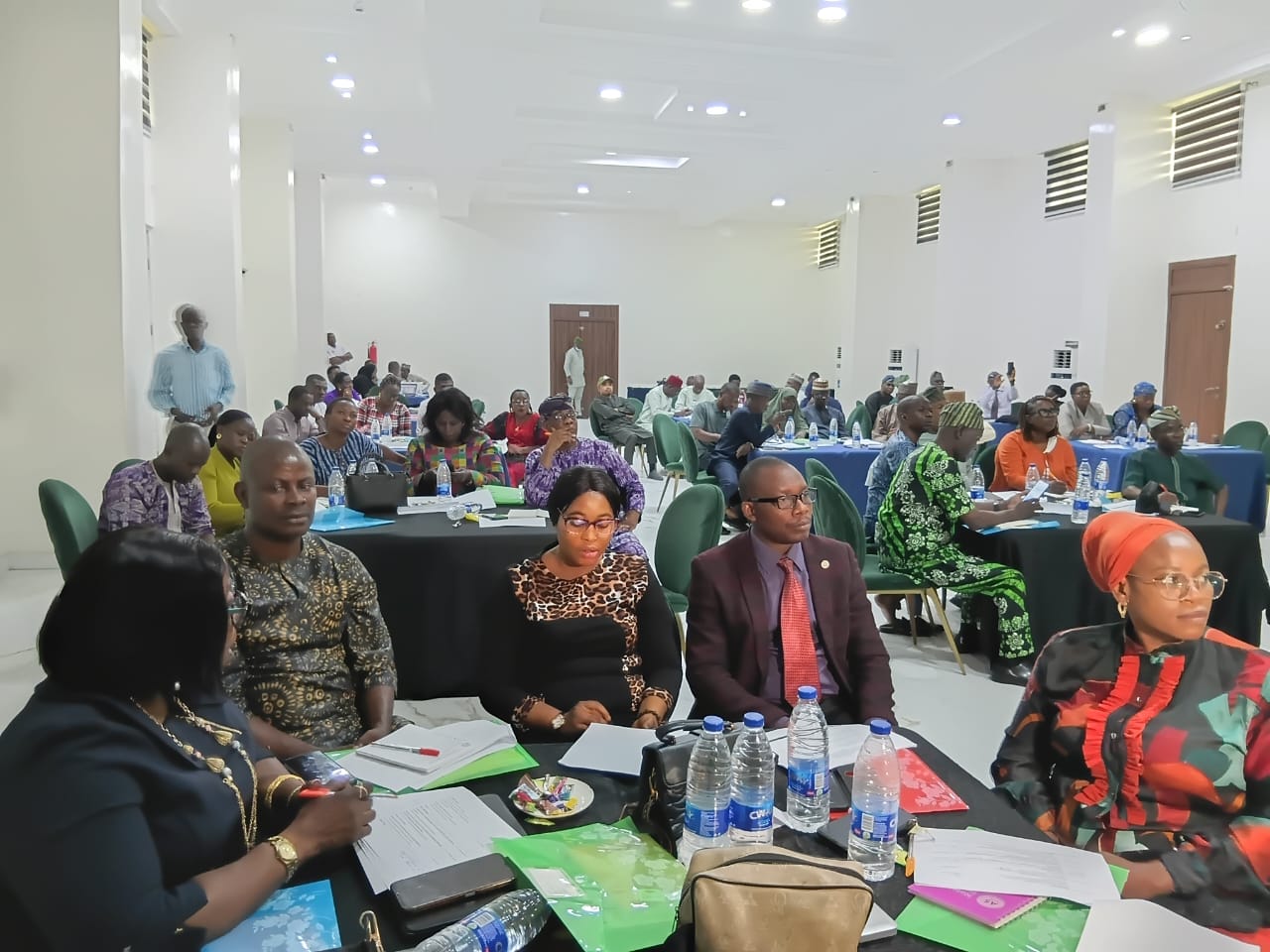
The Universal Basic Education Commission (UBEC) has intensified efforts to strengthen the management of public education funding, bringing together education officials from the South-West and North-Central zones for a five-day capacity-building workshop under the Human Capital Opportunities for Prosperity and Equity (HOPE-EDU) programme. The workshop, organised under Result Area III, focuses on Disbursement Linked Indicators (DLIs) 6 and 7, which address the decentralization of education funds and the provision of annual school grants. The Phase III engagement is designed to equip state and local government officials with the technical knowledge needed to manage education resources transparently and ensure that funding reaches the schools for which it is intended.
Through the training, UBEC seeks to strengthen the capacity of officers responsible for accounts, procurement and other critical administrative functions, particularly in managing matching grants and annual school grants. DLI 6 focuses on decentralizing core Universal Basic Education (UBE) funds to state and local government structures, while DLI 7 concerns annual school grants to help public schools address operational needs and improve learning environments. The grant system is structured around performance and measurable results, with expected outcomes including improved access to textbooks, essential amenities, infrastructure upgrades and safer learning environments.
The Executive Secretary of UBEC, Dr. Aisha Garba, delivered the welcome remarks through the commission’s Programme Manager, Olumuyiwa Aleshin, who also presented the major thematic lecture. Also speaking were HOPE-GOV representative, Hajia Semira Mahmood, on effective coordination of implementation, and UBEC South-West Zonal Director, Beatrice Okei, on the timeliness of the workshop. The Lagos engagement is the third phase of the series, following earlier phases in Kano and Delta states. HOPE-EDU, which became effective in February 2026, is part of a broader effort to address human capital development challenges through improved education delivery and institutional accountability.