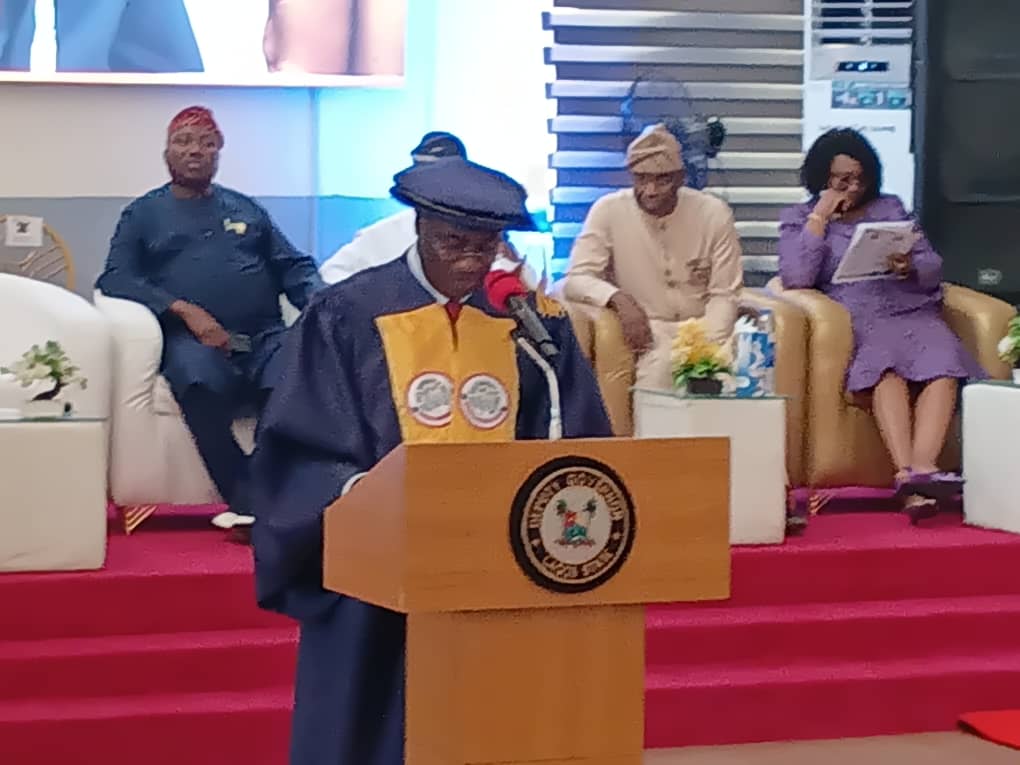
Lagos State Deputy Governor, Dr. Kadri Obafemi Hamzat, has warned that education without character cannot drive national renewal, saying Nigeria needs graduates who are not only knowledgeable but also humane, responsible and courageous enough to do what is right. Delivering the maiden convocation lecture of the Lagos State University of Education (LASUED) on Wednesday, November 18, 2026, titled “Education Without Character: The Missing Link In Nigeria’s Quest For National Renewal,” Hamzat said education should not merely teach people how to earn a living, but how to live responsibly, contribute to society and uphold integrity even when dishonesty appears easier or more profitable. He said the true measure of education is not certificates, scores or employment statistics, but the quality of human being it produces, noting that knowledge tells what can be done while wisdom determines what ought to be done.
Hamzat said beneath many of Nigeria’s development challenges lies a deeper question of values, pointing to contradictions such as celebrating wealth without asking how it was acquired, demanding accountability from leaders while avoiding personal responsibility, and condemning corruption in public while tolerating dishonesty in private. He cited Chapter Two, Section 23 of the Constitution, which lists national ethics as discipline, integrity, dignity of labour, social justice, religious tolerance, self-reliance and patriotism, and urged institutions to translate them into everyday behaviour. He warned that moral education cannot be reduced to preaching in classrooms while society rewards dishonesty, stressing that institutions must build environments where ethical conduct is encouraged, rewarded and protected. He also cautioned against romanticising the past or blaming young people alone, saying responsibility is mutual between generations.
The Deputy Governor stressed the roles of family as the first school of character, teachers as builders of human character, and universities as communities of values where admission, assessment, discipline and administration must reflect fairness and transparency. He urged students to use technology responsibly, warning against using Artificial Intelligence to submit work they do not understand, spreading misinformation, or measuring worth by likes and followers, and reminded them that digital footprint is part of public identity. Speaking directly to youths, Hamzat acknowledged concerns over unemployment, cost of living and uncertain futures, but urged them not to allow desperation to make dishonesty attractive or quick wealth to destroy appreciation for honest work. He proposed integrating moral education across the curriculum, training teachers in values education, strengthening academic integrity, guidance and counselling, community service, digital citizenship education and teacher welfare, concluding that when we nurture a child’s character, we determine how possibilities will be used.