*Celebrating Chief Mrs. Olufunmilola Mutiat Disu: The Better Half of the Inspector-General of Police, a Mother to the Nigeria Police Family and a Humanitarian at Heart*
By ACP Oluseyi Olabisi Okuwobi
There are positions that confer recognition, and there are positions that provide opportunities to make a difference. The true measure of occupying either is not necessarily in the prestige attached to the office, but in the lives touched, the burdens lifted and the hope restored.
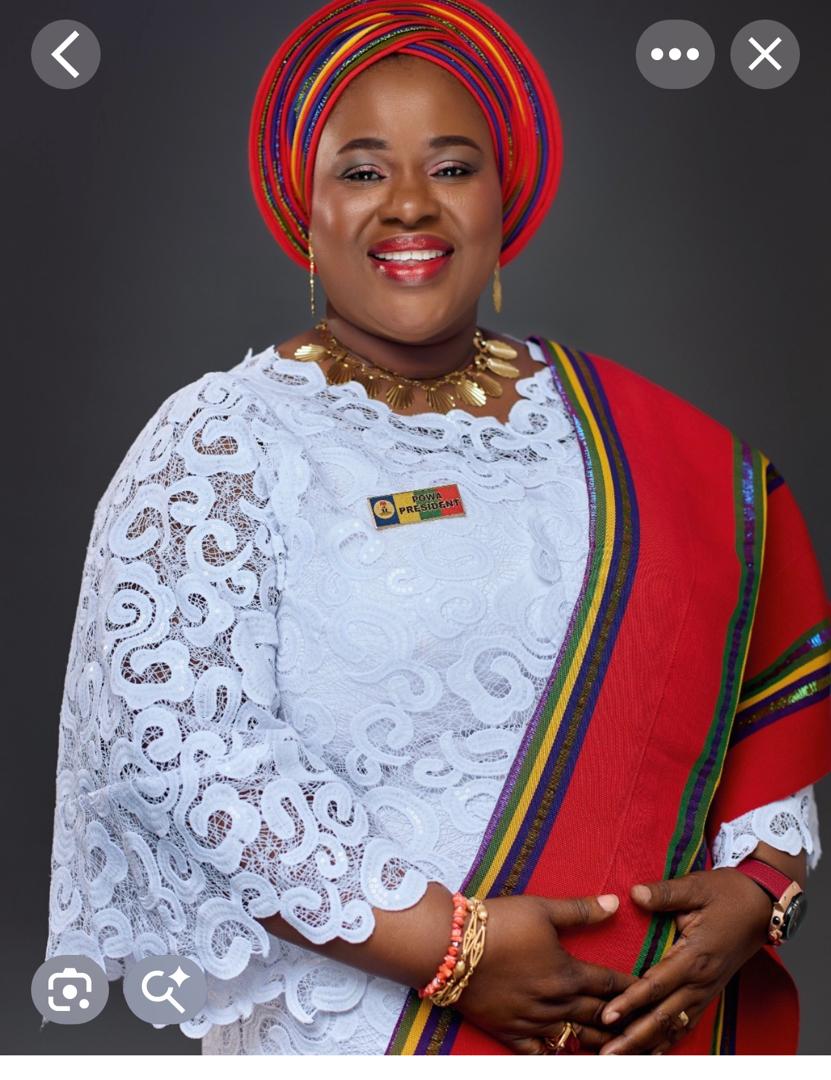
As Chief Mrs. Olufunmilola Mutiat Disu marks another birthday, it is an appropriate moment to celebrate a woman whose contribution to the Nigeria Police Force deserves to be seen beyond the familiar identity of being the wife of the Inspector-General of Police.
She is the better half of the Inspector-General of Police, IGP Olatunji Rilwan Disu, but she is also a woman carving out her own identity through compassion, humanitarian service, advocacy and an unmistakable concern for the welfare of others.
As National President of the Police Officers’ Wives Association (POWA), she has embraced a responsibility that extends far beyond ceremonial engagements and official appearances. Her approach increasingly reflects a simple but powerful conviction: the people behind the uniform matter just as much as the institution they serve.
And perhaps this is the most compelling way to understand her contribution: she is helping to put a human face to the Nigeria Police Force.
*THE WOMAN BEHIND THE TITLE*
It is easy to celebrate the office of the wife of an Inspector-General of Police. It is less common to examine what the occupant of that position does with the influence and opportunities it presents.
Chief Mrs. Disu’s emerging humanitarian profile offers a compelling answer.
Since assuming leadership of POWA in March 2026, as its 23rd indigenous National President, she has articulated an ambition to move the association beyond social engagements into a more structured platform for welfare, economic empowerment, education and family development.
Her declaration that POWA must institutionalise compassion is particularly significant.
It suggests a shift from occasional gestures of kindness towards sustainable interventions that can improve the everyday realities of police families.
This is important because policing is an exceptionally demanding profession. Officers routinely confront danger, uncertainty, traumatic incidents, long working hours and the emotional consequences of public service. Yet, the families who share these sacrifices often remain outside the public conversation.
She appears determined to change that narrative.
*POWA CARES: WHEN COMPASSION BECOMES PRACTICAL*
One of the most visible expressions of her humanitarian commitment is the POWA CARES Initiative.
Its significance lies not merely in the name, but in the practical interventions it has brought to police communities.
During the Lagos phase of the initiative in April 2026, more than 1,000 police families and indigent residents benefited from medical interventions, including general consultations, eye and dental care, treatment, prescription glasses and specialist referrals.
About 200 beneficiaries received ₦50,000 empowerment grants each, while transport support was provided through Cowry Cards. Fifteen nursing scholarships were also announced for children from police families.
These are not merely statistics. Behind each intervention is a family whose medical needs may have been neglected, a woman seeking a means of livelihood, or a young person whose educational journey has received a new opportunity.
The association subsequently strengthened its educational interventions through a partnership with the Niger Delta Development Commission, securing a US$200,000 Master’s scholarship programme for five children of police officers.
This is particularly commendable because it recognises education as an investment in the next generation rather than simply an immediate welfare benefit.
There is a profound difference between giving someone temporary relief and helping to create a pathway towards a better future. The latter is the kind of impact that can outlive an administration.
*SHE DID NOT WAIT FOR THE BARRACKS TO COME TO HER*
Perhaps one of the most revealing dimensions of her leadership is her willingness to take the message of welfare directly to the people.
In July 2026, she undertook unannounced visits to police barracks in Abuja, including Area C Police Barracks, Nyanya, and 44 PMF Barracks, Kuje.
These were not simply protocol visits.
She engaged directly with women traders, widows and spouses of police officers, observing their living and business conditions and listening to their concerns.
The interventions included cash assistance, business starter packs and food items for selected beneficiaries.
There is something particularly meaningful about this style of engagement.
A leader who waits for reports may understand the situation through figures and official briefings. A leader who visits the people gains a different perspective: the human stories behind those figures.
Her willingness to engage with families at their own level reinforces the idea that the welfare of police personnel cannot be adequately addressed without understanding the circumstances of their households.
And importantly, the dignity of a police family should never be determined by the rank of the officer who provides for it.
*A TABLE THAT BRINGS THE POLICE FAMILY TOGETHER*
One of the most heartwarming aspects of her approach is the attention she has given to making ordinary police families feel recognised and valued.
Her engagement with the families of junior and rank-and-file officers, including opportunities for them to wine and dine with the leadership of the Force, communicates something that formal policy statements cannot always achieve.
It tells them that they belong.
At the Lagos POWA CARES engagement, selected beneficiaries were hosted at a special dinner, where each received a ₦500,000 cash gift.
Such gestures may appear modest when viewed against the size of the Nigeria Police Force, but their symbolic importance is considerable.
For families whose lives are shaped by the demands of policing, being recognised, welcomed and celebrated by the leadership of the institution can be deeply affirming.
It is a reminder that the police family is one family, irrespective of rank, posting or station.
*REMEMBERING THE WIDOWS AND FAMILIES OF FALLEN HEROES*
A particularly sensitive aspect of police welfare is the responsibility to remember those whose loved ones paid the ultimate price in service to the nation.
The families of fallen officers carry a burden that does not end with the burial of their loved ones.
They must confront the realities of raising children, sustaining households and rebuilding lives without the person who once provided security and support.
Her participation in the Renewed Hope Initiative’s social investment programme for families of fallen heroes in August 2026 reflected the importance of keeping these families within the national welfare conversation.
The programme provided ₦500,000 each to 323 widows of Nigeria Police Force personnel, alongside widows of fallen Armed Forces personnel.
This is a critical dimension of humanitarian service: remembering people long after public attention has moved elsewhere.
For a police family, the sacrifice of a fallen officer should never become a forgotten national story.
*HER UNDERSTANDING OF THE YOUNG AND THE FUTURE*
Her participation in the Nigeria Police Force’s International Youth Day 2026 National Youth Leadership and Security Initiative offered another perspective on her values.
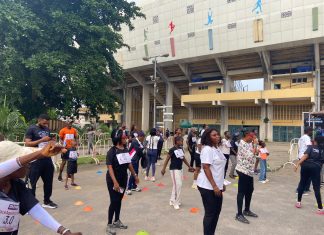
As part of the event, she led a tree-planting exercise involving 50 seedlings donated by the Federal Ministry of Environment, under the campaign:
*PLANT PEACE. GROW NIGERIA. SECURE THE FUTURE.*
Her message to young Nigerians was particularly relevant at a time when the country continues to confront the dangers of political violence, criminal recruitment, misinformation and other threats to youth development.
She spoke not simply as the National President of POWA, but as a mother concerned about the choices, opportunities and future of young people.
The symbolism of planting trees is worth reflecting upon.
A tree requires nurturing, patience, protection and the right environment to grow. So does a child. So does a peaceful society.
Her participation reinforced the message that national security must include investment in the future, the environment and the values that shape responsible citizenship.
It was a fitting reminder that protecting Nigeria is not only about responding to threats; it is also about creating conditions in which the next generation can flourish.
*A WOMAN WHO RECOGNISES THAT POLICING ALSO HAS A HUMAN COST*
Another area deserving attention is her advocacy for mental health support for police officers and their families.
At the Mental Health Conference Nigeria 2026, she drew attention to the psychological demands of policing and the way traumatic experiences can follow officers home.
This is an important conversation.
Police officers routinely encounter violence, death, uncertainty and distressing human situations. They may return home physically present but emotionally affected by the experiences of their duty.
Their spouses and children may also experience the consequences, often without fully understanding what their loved ones are going through.
By calling for mental healthcare to become part of police welfare programmes, she helped draw attention to an aspect of policing that is too frequently overlooked.
The message is clear: caring for the police officer must include caring for the human being behind the uniform and the family that shares the consequences of the profession.
This is a conversation that deserves institutional attention, continuity and practical implementation.
*A COMPLEMENTARY PARTNERSHIP IN PEOPLE-CENTRED LEADERSHIP*
It would be difficult to discuss her humanitarian engagements without acknowledging the leadership philosophy of her husband, the Inspector-General of Police.
IGP Olatunji Rilwan Disu has consistently emphasised the importance of the human dimension of policing, institutional professionalism and the welfare of police personnel.
His wife’s interventions through POWA complement this philosophy by focusing on the home front of policing.
There is an important institutional connection here.
A police officer whose family is neglected, whose children lack educational opportunities, whose spouse struggles with economic insecurity or whose psychological wellbeing is overlooked may find it more difficult to sustain the demands of policing.
Conversely, a supported and stable family can strengthen an officer’s morale, confidence and capacity to serve.
This is why police family welfare should not be regarded as a peripheral social responsibility. It is an important component of institutional development and national security.
The IGP leads the institution, while POWA, under her leadership, is helping to strengthen the human support system around it.
Their respective contributions reinforce an important principle: humanity must remain at the centre of policing.
*BEYOND BIRTHDAYS: THE LEGACY OF A WOMAN WHO CARES*
As she celebrates another year, perhaps the most fitting tribute is not simply to enumerate the programmes she has attended or the initiatives she has championed.
It is to recognise the values those interventions represent.
Compassion that reaches beyond protocol.
Leadership that listens.
Empowerment that creates possibilities.
Education that opens doors.
Welfare that recognises the rank and file.
And a commitment to humanity that remembers even those who can no longer speak for themselves.
No single birthday article can capture every life touched or every intervention undertaken. Neither should appreciation be mistaken for a claim that every welfare challenge within the Nigeria Police Force has been resolved. There remains much work to do.
But acknowledging progress is important, particularly when it encourages the continuation and expansion of meaningful service.
Chief Mrs. Olufunmilola Mutiat Disu has an opportunity to build a legacy that will be remembered not merely by the title she holds or the office her husband occupies, but by the structures she helps strengthen and the lives she helps transform.
That is a legacy worth celebrating.
*A BIRTHDAY PRAYER*
Ma, as you mark another year, may the Almighty God replenish your strength, preserve your health, enlarge your capacity to serve and bless you with the wisdom to continue making a difference.
May every seed of kindness you have planted yield abundant harvests. May the families you have supported, the children whose dreams you have encouraged and the women whose hopes you have rekindled become enduring testimonies of God’s goodness in your life.
May your home remain blessed, your marriage strengthened, your joy renewed and your days filled with peace.
May God grant you the grace to accomplish even more, and may you always find the support, love and goodwill that you so generously extend to others.
*Happy Birthday, Ma.*
You are celebrated not only as the better half of the Inspector-General of Police, but as a woman whose compassion is giving humanity a face within the Nigeria Police family.
Happy Birthday to a mother, a humanitarian and a woman of grace.
*ACP OLUSEYI OLABISI OKUWOBI*
Writes from Abuja.