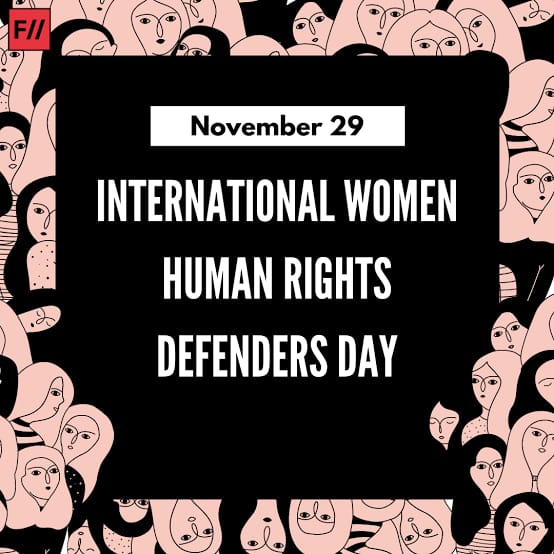
As the world marks International Women’s Human Rights Defenders Day, attention must also turn to the wellbeing of the women and teams who dedicate their lives to protecting the rights, dignity and safety of others.
Every day, women human rights defenders show up for others. They challenge injustice, support survivors of violence, advocate for policy change, defend communities and speak out against violations of human rights. They work in difficult environments, confront resistance and often carry stories and experiences that are not easy to leave behind at the end of the working day.
They are caseworkers who listen to survivors, counsellors who provide emotional support, field officers who work directly with communities, programme officers who coordinate interventions and leaders who carry the responsibility of keeping organisations and their missions alive.
But the work does not rest on these roles alone. Behind every successful intervention are finance officers, administrative staff, communications teams, volunteers and other support personnel whose contributions are equally important. They may not always be visible, but they are part of the work. Every role matters.
Yet, while much attention is rightly given to the people and communities human rights defenders support, the wellbeing of the defenders themselves is often overlooked. Working to protect human rights can be deeply rewarding, but it can also take an emotional, physical and psychological toll.
For women human rights defenders, the demands may extend beyond their official responsibilities. They may listen to painful accounts of violence, respond to urgent cases, navigate difficult community situations, manage organisational pressures and meet expectations from multiple directions.
The impact is not limited to those who work directly with survivors. Organisational leaders may carry the pressure of funding, sustainability and staff welfare. Programme teams manage deadlines and demanding activities. Finance and administrative personnel work to keep systems running. Communications staff are often responsible for communicating difficult realities while meeting organisational expectations. Volunteers give their time and energy, sometimes without the support available to full-time staff.
Different responsibilities, but a shared reality: everyone contributes, and everyone can be affected by the demands of the work.
The commitment to a cause can sometimes make it difficult to admit exhaustion. Some people feel they must remain strong because others depend on them. Others become so accustomed to supporting colleagues and communities that they struggle to recognise when they also need support. Over time, this can contribute to stress, burnout, compassion fatigue and other wellbeing challenges.
Commitment should not come at the cost of wellbeing. There is a need to change how organisations understand commitment and service. Being dedicated does not mean being available at all times. Being compassionate does not mean carrying every burden alone. And being a human rights defender does not mean having to sacrifice one’s wellbeing to prove commitment.
Self-care is important, but it cannot be the only response to the pressures people experience. Organisations also have a responsibility to create working environments where staff and volunteers can speak openly about stress, access appropriate support, take time to rest and feel safe asking for help.
This means looking beyond individual coping strategies to consider workloads, leadership practices, workplace relationships, access to psychosocial support, reasonable boundaries and organisational policies that promote wellbeing. A healthy organisation is not one where people never experience stress. It is one where people are not left to deal with that stress alone.
One important part of this conversation is recognising that care must extend across all levels of an organisation. The Executive Director matters. The programme officer matters. The caseworker matters. The counsellor matters. The field officer matters. The finance officer matters. The communications and administrative staff matter. The volunteer matters. No contribution should be considered too small to deserve attention, and no person’s wellbeing should be overlooked because their role is less visible.
When organisations recognise the people behind the work, they create stronger teams, healthier relationships and more sustainable ways of advancing human rights.
For us at Women’s Rights and Health Project (WRAHP), the question of who cares for the people who care is an important one. Through its work with women, young people and communities, WRAHP recognises the importance of protecting the wellbeing of those who dedicate their time and energy to advancing rights and supporting others.
As we mark International Women’s Human Rights Defenders Day, celebrating the courage and contributions of women human rights defenders must go hand in hand with asking what is being done to protect their wellbeing. We must recognise not only the work they do, but also the people they are beyond that work.
They need rest. They need support. They need understanding. They need spaces where they can be vulnerable without being judged and where their wellbeing matters as much as the causes they defend. The responsibility does not rest with individuals alone. Organisations, partners, communities and the wider human rights sector all have a role to play.
Because the work of defending rights should not come at the cost of the people doing it. Those who care for others deserve care too.
*About WRAHP*
Women’s Rights and Health Project (WRAHP) is a women-led non-governmental organisation that promotes the health and general development of women, young people and communities using a rights-based approach. WRAHP envisions a just society where the dignity of women, young people and communities is respected, and they enjoy sound health and maximise their potential.