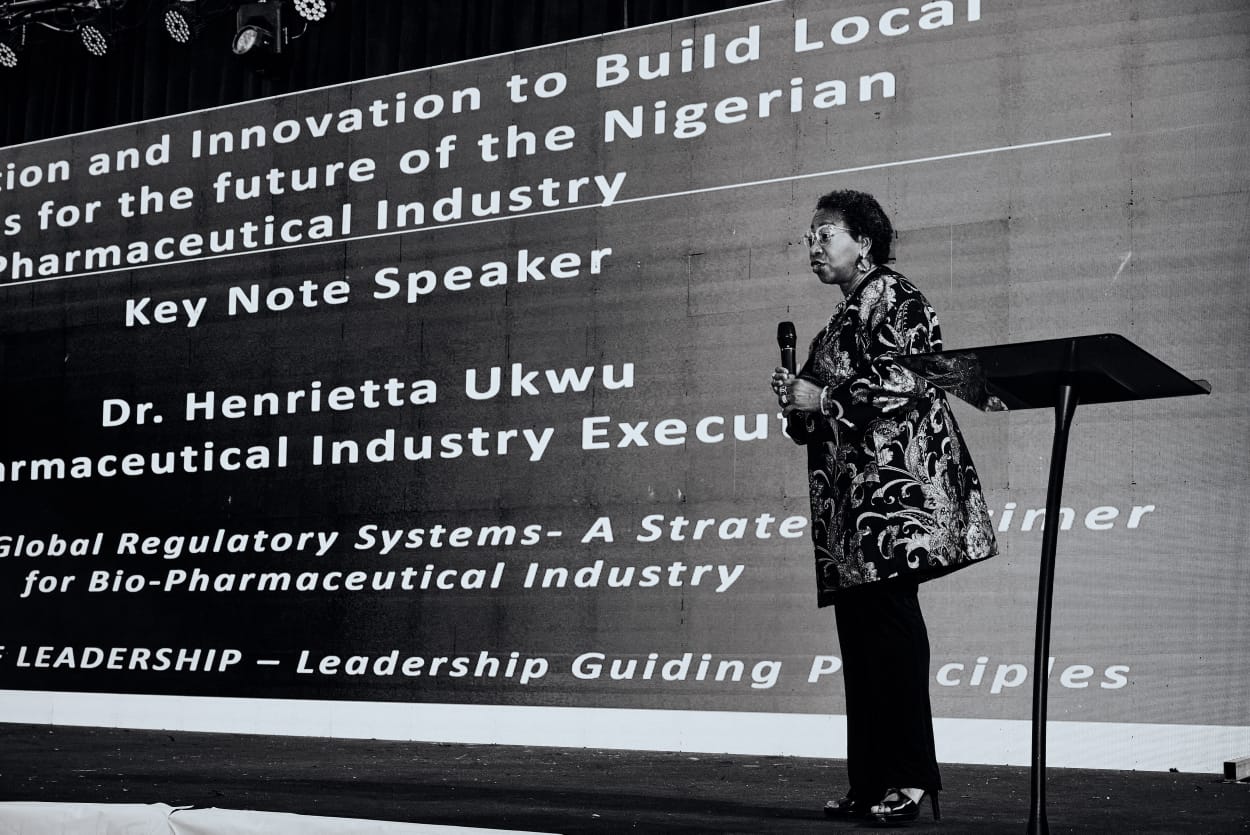
Biopharmaceutical executive Dr. Henrietta Ukwu has called on Nigeria to urgently reduce its 70% reliance on imported medicines, warning that the dependence undermines health security and economic growth. Speaking at the 29th Annual Conference of the Association of Industrial Pharmacists of Nigeria in Ilorin, she urged the Tinubu administration to deepen support for local pharmaceutical production under the theme “Collaboration and Innovation to Build Local Solutions for the Future.” Ukwu said Nigeria has the natural and human resources to build a competitive industry but has yet to fully harness them, stressing that true health sovereignty requires manufacturing medicines, vaccines, and medical devices locally.
She highlighted ongoing efforts such as President Tinubu’s Renewed Hope Agenda and the Presidential Initiative for Unlocking the Healthcare Value Chain, which aims to raise local manufacturing to 70% by 2030. Ukwu pointed to partnerships between IFC and Fidson Healthcare, EU-backed ELMiN, France’s Qualimed Project, and Nigeria’s cooperation with Brazil as signs of progress, alongside Emzor’s near-complete API plant in Sagamu. She also praised NAFDAC’s “5+5 Policy” and new workforce initiatives like Empower Academy 2026 and the NAIP Academy for building industry capacity.
Despite the momentum, Ukwu warned that high energy costs, poor infrastructure, limited access to affordable financing, and scarce raw materials remain major barriers. Only about 10% of local firms can access long-term capital for large-scale API production, she said. To move beyond basic “fill-and-finish” operations, she called for funding support from the Nigeria Sovereign Investment Authority and EIB, foreign exchange relief, duty exemptions on raw materials, and harmonized African regulations to boost exports. NAIP Chairman Bankole Ezebuilo echoed the call, saying no nation can outsource health security and survive.