Lagos State Governor Babajide Sanwo-Olu has called for inclusive urbanisation to drive prosperity and protect indigenous communities, saying effective urban planning in Lagos is crucial for unlocking economic prosperity, improving connectivity, and empowering indigenous groups.
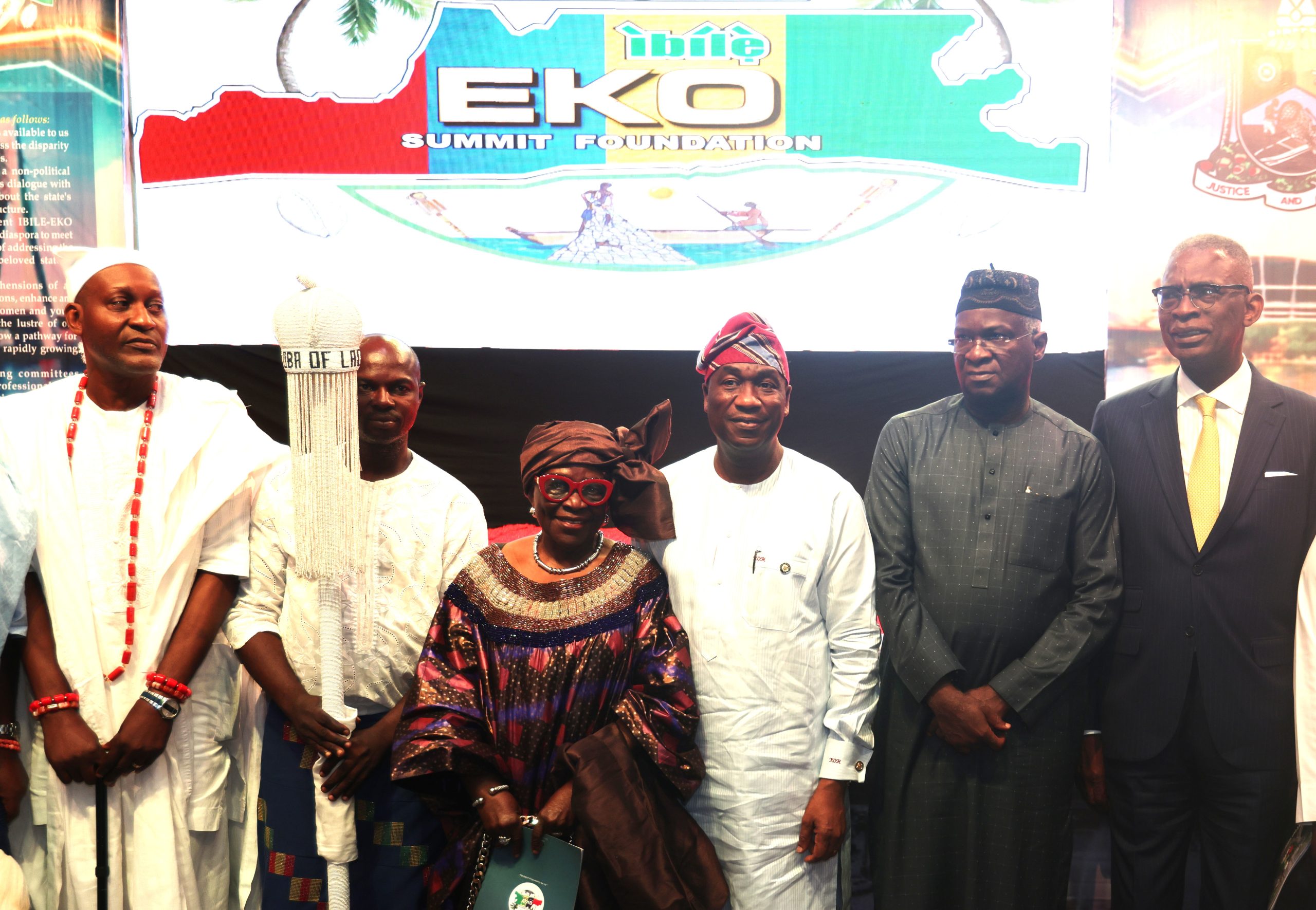
The governor spoke on Wednesday at the General Assembly of Indigenous Associations in Lagos State, hosted by the IBILE Eko Summit Foundation, themed “Addressing Urbanization and Urban Challenges of Lagos State,” held at Shell Hall, MUSON Centre, Onikan. He was represented by Deputy Governor Kadri Obafemi Hamzat.
Sanwo-Olu said urbanisation is not the enemy of indigenous identity but must be guided by a government that sees, hears, and plans with the people. According to him, indigenous communities must remain central to Lagos’ development agenda, and every planning decision, infrastructure project, and policy must reflect their voices.
He noted that while rapid urbanisation has brought opportunities and growth, it has also strained infrastructure in communities across the state. The government, he said, is investing massively in infrastructure and amenities to enhance the well-being and living standard of Lagosians.
The governor said his administration has pursued inclusive development across all five IBILE divisions in the past seven years through major investments in infrastructure, transportation, healthcare, housing, and economic development. He cited the Opebi-Mende Link Bridge and the operational Red Line Rail in Ikeja; the Badagry road network, a Mother and Child Centre and housing schemes; the Imota Rice Mill in Ikorodu, now the largest in Africa; the reconstruction of Massey Children’s Hospital and the J.K. Randle Centre on Lagos Island; and the rehabilitation of the Eti-Osa-Lekki-Epe corridor alongside new health facilities and jetties in Epe.
Reaffirming Lagos’ position as one of the fastest-growing cities in the world with a population exceeding 20 million, Sanwo-Olu said the state remains Africa’s most dynamic urban economy, contributing nearly a third of Nigeria’s GDP and attracting global investment. However, unmanaged growth continues to place pressure on infrastructure and traditional livelihoods. He warned that without deliberate planning, urbanisation could deepen inequalities, especially in indigenous and waterfront communities that existed before the city’s rapid expansion.
In his keynote address themed “Urban Subnational Challenges: Leadership, Policy Reform and Governance,” former Minister of Housing Babatunde Raji Fashola called for urgent reforms in housing and transportation as part of a structured and inclusive approach to managing Lagos’ urbanisation. He described Lagos as a historic homestead with a rich cultural identity that has shaped its emergence as a major economic hub, noting that while the state attracts opportunities and global attention, its uniqueness must be protected. He urged key ministries, including Transportation, Budget and Planning, Housing, and Environment, to engage more with stakeholders by presenting clear plans, challenges, and expectations.
Fashola underscored the importance of reliable data for effective governance, advocating for expanding initiatives such as the Lagos State Residents Registration Agency to improve identity management and service delivery. He further called for renewed investment in mass transit systems and the development of housing along emerging rail corridors.
In his welcome address, IBILE Eko Summit Foundation President Olasupo Shasore said the forum was designed to strengthen unity among indigenous groups and address challenges affecting their identity and development. He added that the summit aims to promote inclusion by creating a platform where indigenous voices, experiences, and expertise can contribute to the development of Lagos State.
Shasore stressed the importance of unity and cultural identity as a key strength for driving sustainable development and greater global recognition of Lagos and its people. He emphasized the need to align development with global standards such as the Sustainable Development Goals, particularly in housing, transportation, environmental sustainability, and waste management.
In his goodwill message, the Oba of Lagos, Oba Rilwan Akiolu, represented by the Bajulaye of Lagos, Prince Ayodele Oyekan, commended the IBILE Eko Summit Foundation for its commitment to the development of indigenous people in Lagos. He noted that the Council of Obas in Lagos places high importance on community development, adding that the Lagos State Government has consistently prioritized the growth and upliftment of all IBILE divisions.
Akiolu added that traditional rulers in Lagos are committed to ensuring indigenous people have a voice in community development and governance, emphasizing that Lagos remains prepared for urbanisation, youth empowerment, sustainable development, and social inclusion.