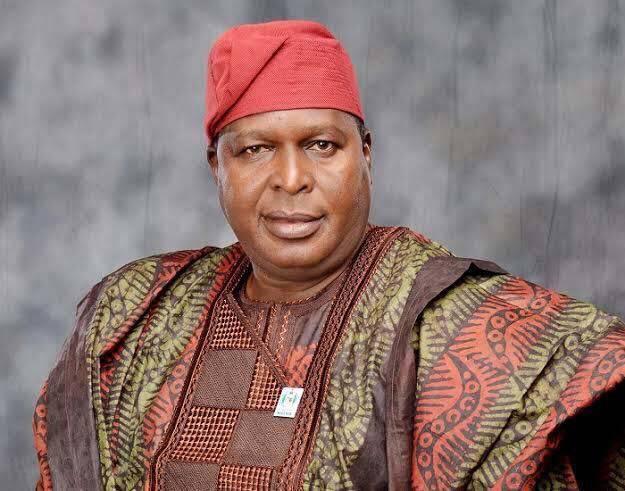
President Tinubu, Recall Him. Give Him Tourism. Let Him Reboot Nigeria.
*By Frank Meke*
There are men who occupy public offices, and there are men who, through their passion, commitment and impact, become synonymous with the institutions they lead.
Otunba Olusegun Runsewe, OON, belongs to the latter category.
My friend, Nkereuwem Onung, would often offer a heartfelt prayer: “May Otunba Segun Runsewe live long.” It is more than an ordinary prayer. It reflects a deep appreciation of a man whose contributions to Nigerian tourism and culture continue to resonate with those who understand the industry’s journey and what it could have become with sustained leadership.
To appreciate the state of Nigerian tourism today, one must revisit what Runsewe achieved between 2006 and 2013 and subsequently at the National Council for Arts and Culture (NCAC). More importantly, one must examine why President Bola Ahmed Tinubu should consider bringing his experience, institutional knowledge and leadership capacity back into the country’s tourism sector.
Let me be clear: Nigeria has had few tourism administrators whose impact can be compared with Runsewe’s. Since his departure from the Nigerian Tourism Development Corporation (NTDC) in 2013, the industry has struggled to sustain the level of visibility, coordination and international engagement witnessed during his tenure.
2006: HE MET A COMATOSE CORPORATION AND GAVE IT LIFE
In August 2006, Runsewe was appointed Director-General of the Nigerian Tourism Development Corporation (NTDC), now the Nigerian Tourism Development Authority (NTDA).
He inherited an institution that, by his assessment and that of many industry observers, had become largely inactive and disconnected from the wider tourism industry. What followed was a deliberate attempt to reposition the corporation as a visible, proactive and stakeholder-driven institution.
His first major move was to declare a state of emergency in the corporation, signalling a departure from the old order. He introduced what he described as *practical tourism*, built around efficiency, effectiveness, professionalism and meaningful collaboration with stakeholders.
Runsewe did not confine tourism development to government offices in Abuja. He took the message to Nigerians, engaging industry practitioners and promoting tourism as an important component of national development.
It was during this period that the slogan *”Tourism is Life”* became a defining feature of NTDC’s public engagement.
For Runsewe, tourism was more than festivals, ceremonies and entertainment. It was about employment, enterprise, investment, cultural preservation and economic opportunities for ordinary Nigerians.
Under his leadership, NTDC intensified Nigeria’s participation in international tourism events and strengthened the country’s visibility as a potential destination in the African tourism market.
HE PUT NIGERIA ON THE GLOBAL TOURISM MAP
One of the defining features of Runsewe’s administration was Nigeria’s consistent participation in major international tourism exhibitions.
Year after year, Nigeria maintained a presence at prominent global platforms, including:
– **FITUR, Madrid, Spain**
– **ITB Berlin, Germany**
– **Arabian Travel Market, Dubai**
– **World Travel Market, London**
These exhibitions provided opportunities for Nigeria to engage international tour operators, investors, destination marketers and tourism organisations.
During his tenure, NTDC reportedly received several commendation letters from international tourism event organisers, including WTM London and FITUR Spain.
Runsewe also distinguished himself through international engagements, including addressing a World Press Conference at WTM London. His administration equally introduced initiatives such as satellite navigation technology to support tourism development in Nigeria.
The significance of this international visibility becomes clearer when viewed against Nigeria’s subsequent challenges in maintaining a consistent presence at major global tourism exhibitions.
Following his departure in 2013, Nigeria’s participation at WTM London reportedly suffered a prolonged interruption, with the National Association of Nigeria Travel Agencies (NANTA) subsequently investing its members’ resources in efforts to restore the country’s presence between 2022 and 2024.
That development underscores the importance of institutional continuity and sustained government support for destination marketing.
ABUJA CARNIVAL: A CULTURAL SPECTACLE THAT SET THE STANDARD
Runsewe’s contributions were not limited to international exhibitions. He also played a pioneering role in the organisation of the Abuja Carnival as Chairman of its Planning Committee.
The inaugural edition established a benchmark for the organisation and presentation of Nigeria’s cultural diversity through a major national event.
Its organisation, cultural displays and elaborate productions helped position the carnival as an important platform for promoting Nigeria’s heritage and attracting international attention.
The event reportedly attracted interest beyond Nigeria, including an approach from Trinidad and Tobago seeking his expertise in organising a cultural celebration in connection with the Commonwealth Heads of Government Meeting (CHOGM).
This reflects an important aspect of Runsewe’s philosophy: Nigerian culture should not merely be celebrated internally; it should be professionally packaged and presented as a product capable of attracting international recognition and economic value.
2010 WORLD CUP: NIGERIA STOLE THE SHOW WITHOUT PLAYING
Nigeria’s participation at the 2010 FIFA World Cup in South Africa was not particularly memorable on the football pitch. However, the country’s cultural presence at the tournament provided another story.
Through the Nigerian Tourism Village, an initiative championed by Runsewe, Nigeria created a cultural showcase that attracted attention at the global sporting event.
The village provided an opportunity to project Nigerian arts, crafts, music, culture and hospitality to international visitors. The initiative reportedly received recognition at the tournament and became an important public relations achievement for the country.
Runsewe repeated a similar cultural projection in 2018, when Nigeria showcased its arts and culture during the FIFA World Cup in Russia.
He understood something that many policymakers often overlook: international audiences do not engage with countries through policy documents alone. They connect with their stories, food, music, cultural expressions and hospitality.
HE BUILT SYSTEMS, NOT JUST SHOWS
Perhaps one of Runsewe’s most significant contributions was his recognition that sustainable tourism development requires institutions, infrastructure and systems, not just festivals and public celebrations.
During his tenure at NTDC, he introduced biometric data registration for workers in the hospitality industry, an initiative designed to improve accountability, strengthen security and address concerns about criminal activities within the sector.
He also transformed the NTDC premises in Area 1, Garki, Abuja, into a Tourism Village, creating a more functional and visitor-friendly environment. The old secretariat was similarly repositioned into a modern working facility.
His vision extended to tourism infrastructure, including the proposed development of a Fish House at the Argungu Fishing Village.
These initiatives demonstrated his interest in connecting tourism promotion with practical infrastructure and institutional development.
In recognition of his contributions, the Federal Government conferred on him the national honour of Officer of the Order of the Niger (OON). In 2011, he was also decorated as Tourism Man of the Year by Vice President Namadi Sambo, who described him as a beacon of hope for the tourism industry.
2017: HE MOVED TO NCAC AND REPEATED THE FEAT
When former President Muhammadu Buhari appointed Runsewe Director-General of the National Council for Arts and Culture (NCAC) in 2017, some may have considered the appointment a departure from mainstream tourism administration.
But Runsewe approached the new assignment with the same energy and determination.
One of his major achievements was the repositioning of the National Festival of Arts and Culture (NAFEST), which had struggled for years to achieve the level of national relevance and economic impact expected of such an important cultural platform.
Under his leadership, NAFEST was rebranded and elevated into a major national cultural event, attracting greater interest from state governments and cultural stakeholders.
From Kaduna to Rivers, Edo, Plateau, Ekiti and Lagos, the festival became a platform for showcasing Nigeria’s cultural diversity, promoting national unity and highlighting the economic opportunities within the creative and cultural industries.
What had previously been criticised as an event with limited impact gradually gained wider recognition and became a programme that states actively sought to host.
Runsewe travelled across the country, promoting cultural understanding, national cohesion and the economic relevance of Nigeria’s cultural heritage.
His administration sought to make NAFEST more than an annual celebration. It became a platform for cultural exchange, skills development, enterprise and national integration.
NAFEST BECAME BANKABLE, NOT JUST A FESTIVAL
This is perhaps one of the most important aspects of Runsewe’s leadership at NCAC.
He understood that cultural festivals must deliver economic value beyond entertainment. They must create employment, support artisans, develop skills and attract investment.
Consider some of the initiatives introduced during his tenure:
*1. Skills Acquisition as an Economic Tool*
At NAFEST and other cultural events, particular attention was given to skills acquisition, especially for women, young people and artisans.
At the 2017 African Arts and Crafts Expo, for instance, 2,125 participants reportedly received training in the production of Ankara bags and shoes, hand fans, beaded slippers, liquid soap, antiseptics and air fresheners.
The objective was to transform cultural and creative skills into sustainable sources of livelihood.
*2. The Bank of Industry’s ₦300 Million MoU*
Runsewe also signed a ₦300 million Memorandum of Understanding with the Bank of Industry to facilitate access to financing for young people and artisans involved in arts and crafts.
The initiative was designed to address one of the longstanding challenges facing creative entrepreneurs: access to affordable capital.
It reinforced the argument that culture could become an economic asset rather than remain an activity dependent on government funding.
*3. From AFAC to INAC: Taking African Crafts Global*
He also repositioned the African Arts and Crafts Expo (AFAC), expanding its scope into the International Arts and Crafts Expo (INAC).
The thinking was straightforward: Nigeria should not limit its cultural and creative exhibitions to African participation when it had the capacity to attract countries from across the world.
The rebranded platform subsequently provided opportunities for international cultural exchange and participation in Abuja.
*4. The 37 Cultural Wonders of Nigeria*
Another initiative was the promotion of the 37 Cultural Wonders of Nigeria, designed to identify and showcase significant cultural attractions across the 36 states and the Federal Capital Territory.
The idea was to give greater visibility to Nigeria’s diverse cultural assets and demonstrate their potential as tourism products.
*5. The 1,000 Palaces of Pride*
Runsewe also proposed a compendium of traditional rulers’ palaces, featuring prominent royal institutions such as the Sultan of Sokoto, Ooni of Ife, Obi of Onitsha and Alake of Egbaland.
The concept was to recognise traditional institutions as important components of Nigeria’s cultural heritage and potential tourism attractions.
*6. Culture as Nigeria’s New Oil*
Runsewe consistently advocated the economic repositioning of culture, describing NCAC as the “Central Bank of Culture in Nigeria” and culture as the country’s next oil.
His administration sought to introduce an entrepreneurial approach to cultural programmes, exploring opportunities in merchandising, crafts, exhibitions and other creative enterprises.
*7. COVID-19: Keeping Culture Alive**
When the COVID-19 pandemic disrupted economic activities across the world, Runsewe’s administration explored local production of face masks and hand sanitisers using locally available materials.
NCAC also organised NAFEST 2020 in Jos, Plateau State, under the theme, “COVID-19 and Cultural Dynamism.”
The event, which reportedly attracted representatives of 32 embassies, demonstrated an effort to sustain cultural engagement despite the difficult circumstances.
*8. The Revival of Argungu Fishing Festival**
Runsewe also championed efforts to revive the Argungu International Fishing and Cultural Festival after years of inactivity.
The festival, widely regarded as an important symbol of cultural heritage and national unity, received renewed attention through the revival campaign.
*9. E-Library and Global Cultural Visibility**
His administration also pursued the development of an electronic library to connect Nigeria’s diverse cultural heritage with audiences in approximately 150 countries.
The initiative reflected an understanding that digital platforms could help preserve, document and promote Nigerian culture beyond geographical boundaries.
These initiatives illustrate the economic possibilities embedded in cultural development. Beyond dancing and drumming, culture can create jobs, support small businesses, attract investment and generate foreign exchange.
WHY TINUBU SHOULD CONSIDER RECALLING HIM NOW
Mr President, with all due respect, Nigeria’s tourism industry needs experienced leadership, institutional memory and a clear direction.
Since Runsewe left NTDC in 2013, the sector has experienced several administrative changes, shifting policy priorities and challenges in sustaining international visibility.
Government structures have evolved, ministries and agencies have undergone changes, and the private sector has increasingly taken on responsibilities in promoting Nigeria as a destination.
Recent efforts by NANTA, NATOP and AITEC World to promote Nigeria’s tourism interests on international platforms demonstrate the commitment of private-sector practitioners.
NANTA has invested resources in restoring Nigeria’s visibility at international tourism exhibitions, while NATOP has introduced the Nigeria Tourism Passport as a destination marketing initiative. AITEC World has also provided a platform for projecting Nigeria’s tourism and investment opportunities internationally.
These are commendable efforts. However, the private sector cannot shoulder the entire responsibility of national destination marketing without consistent government leadership, policy support and institutional coordination.
Nigeria needs someone who understands both tourism and culture, has experience managing national institutions, possesses international industry relationships and appreciates the economic value of cultural heritage.
Runsewe has occupied leadership positions in both NTDC and NCAC. His experience across the two institutions gives him a unique understanding of the relationship between tourism promotion and cultural development.
President Tinubu should therefore consider bringing him back into the national tourism leadership structure, whether through a ministerial appointment or a strategic advisory position with a clear mandate and the necessary authority to deliver.
What could he achieve within 24 months?
His previous record provides some indication of the possibilities:
– Restore Nigeria’s consistent participation at WTM London, FITUR Madrid, ITB Berlin and Arabian Travel Market through properly coordinated national tourism pavilions.
– Develop a unified national cultural tourism calendar that connects NAFEST, INAC, Abuja Carnival and Argungu Fishing Festival, giving international tour operators opportunities to package and promote these events.
– Strengthen financing opportunities for artisans, creative entrepreneurs and cultural businesses through partnerships with the Bank of Industry, commercial banks and diaspora investors.
– Encourage states to develop and promote their tourism destinations through competitive cultural and tourism programmes, building on the experience of NAFEST.
– Reposition *Tourism is Life* as more than a promotional slogan by integrating tourism and cultural enterprise into Nigeria’s broader economic development agenda.
Mr President, you understand the importance of identifying people who can translate vision into results. Your experience in Lagos demonstrates the value of building institutions and empowering individuals with the capacity to deliver.
Runsewe is an experienced tourism and cultural administrator whose previous assignments offer a basis for considering him for another national responsibility.
Nigeria’s cultural tourism potential remains enormous. With its diverse languages, festivals, historical landmarks, traditional institutions, natural attractions, creative industries and hospitality offerings, the country has considerable assets that can support a thriving tourism economy.
The challenge is to organise, package, market and monetise these resources.
Runsewe has spent much of his professional career advocating that very proposition.
OTUNBA MUST LIVE LONG
I say this with all sincerity: Otunba Segun Runsewe must live long.
He must live long to witness a Nigeria where culture becomes a stronger pillar of the national economy.
He must live long to see the young people he encouraged to acquire skills in Ankara bag-making, crafts and other creative enterprises grow into successful business owners and exporters.
He must live long to see NAFEST achieve its full potential as one of Africa’s leading cultural festivals.
He must live long to see Nigeria reclaim its place in the global tourism conversation.
And he must live long to see the work he began in 2006 receive the institutional continuity and policy support it deserves.
As members of the media, tourism practitioners and industry associations, including NANTA, NATOP, FTAN and AITEC, we must also learn to celebrate people who have made contributions to the industry while they are still alive and available to share their experience.
Runsewe should not be remembered only through tributes and retrospective accounts. His experience, institutional knowledge and ideas should remain available to a sector that continues to search for sustainable direction.
He is more than a former Director-General. He is an experienced cultural administrator, a passionate tourism advocate and a significant figure in the history of Nigeria’s tourism development.
**Mr President, consider recalling him. Give him a clear mandate. Let him help reboot Nigeria’s tourism and cultural economy.**
The industry has made its case. The opportunity for renewed leadership is here.
*Tourism is Life. And Runsewe has spent years preaching that gospel.*
#RunseweMustLiveLong #TourismIsLife #RecallRunsewe #NaijaCulture #TinubuRecallRunsewe